Colin D Reader
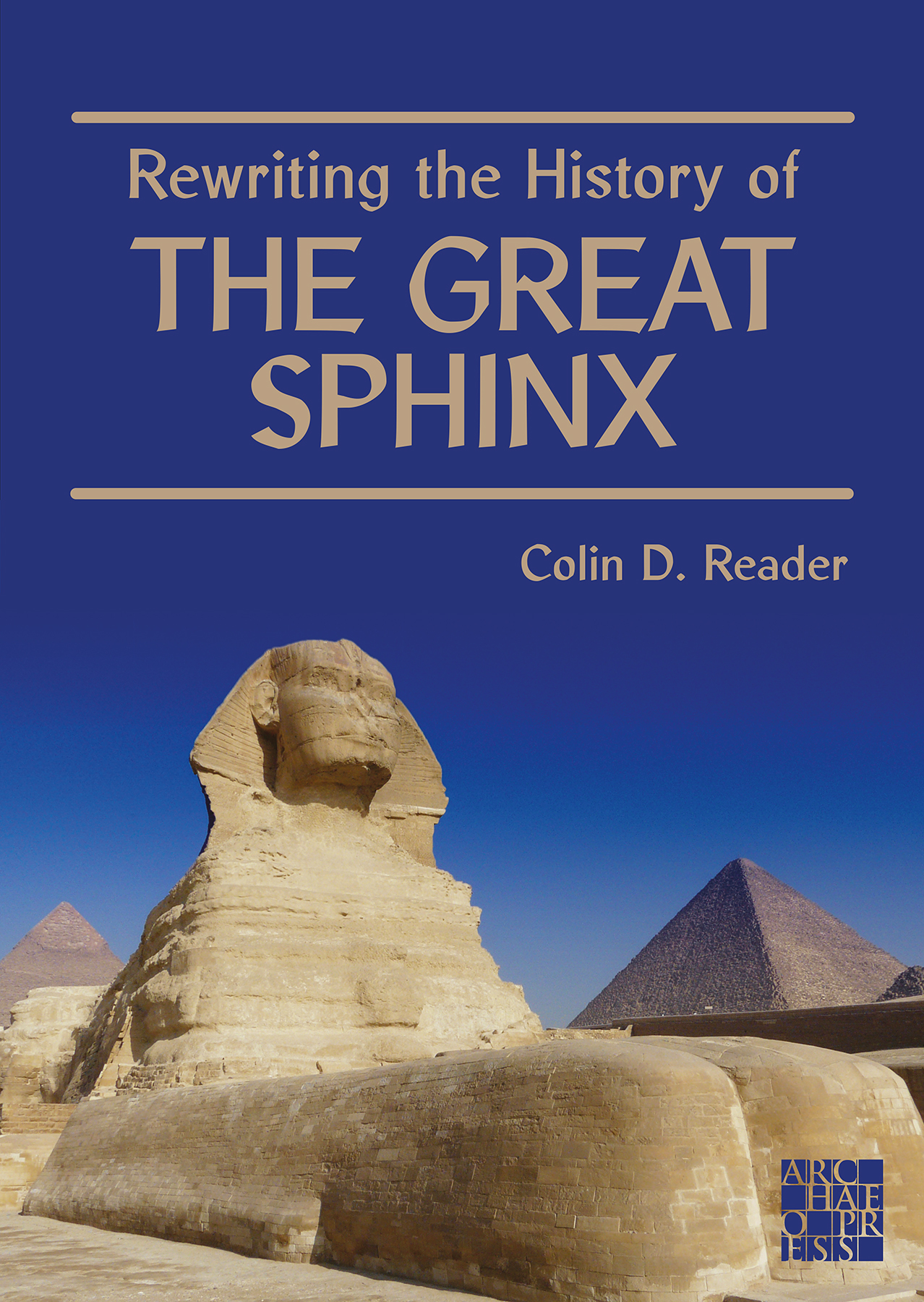
Rewriting the History of the Great Sphinx
Colin D Reader is a geologist with over thirty years’ experience working in the construction industry and a deep interest in ancient Egypt. He has published papers in a number of peer-reviewed Egyptology journals and in his first book, A Gift of Geology, he examined the influence of Egypt’s geology and landscape on the developing cultures of the Nile Valley. He worked as project geologist for the Saqqara Geophysical Survey Project, mapping the soils and rocks of North Saqqara, and has travelled extensively in Egypt.
|
This book reinterprets the Great Sphinx, challenging its traditional dating and meaning. Drawing on archaeological and geological evidence, it argues the monument predates Egypt’s first pyramids and reveals early ritual activity at Giza, reshaping views of its origins and symbolism.
The Great Sphinx has guarded the Giza Plateau in Egypt for many thousands of years. Despite there being relatively little direct evidence, it is generally assumed that this iconic monument is some 4500 years old, built at the same time as Giza’s great pyramids.
This book challenges the established history of the Giza Necropolis to present the only comprehensive, evidence-led account of the history and ritual meaning of the Great Sphinx. After re-examining the archaeological evidence and then considering the important role of geology, the book concludes that the Great Sphinx and a number of related monuments, were built at Giza in the earliest stages of the Pharaonic Era – in the period before Egypt’s first pyramids were built. Perhaps more surprisingly, evidence emerges that the Great Sphinx may not have been the first monument built at Giza, with indications of ritual activity at this important site, which pre-dates Egypt’s first pharaohs.
By answering these uncertainties regarding the age of the Great Sphinx, a new picture unfolds of what the concept of the human-headed lion meant to the people that originally built it.
|
 |
|